


Photography vs. Illustration: How to Master the Mix for a Dynamic Gallery Wall
The secret to mixing photography and illustration lies in establishing a visual hierarchy through color consistency or thematic links. By balancing the realistic detail of photography with the interpretive nature of illustration, you create a gallery wall that offers depth, texture, and sophisticated contrast.
Photography vs. Illustration: How to Master the Mix for a Dynamic Gallery Wall
The Answer: Mixing photography and illustration is one of the most effective ways to elevate an interior space. The key is to find a common thread—typically a color palette, a specific theme (like nature or urban life), or a consistent framing style—while embracing the contrast in texture. By balancing the visual weight of crisp, realistic photos with the artistic flair of graphic illustrations, you create a layered, dynamic aesthetic known as "transitional styling" that adds depth and personality to any room.
At Posterlefi, we often see customers torn between the sharp realism of photography and the expressive freedom of illustration. The good news? You don't have to choose. In fact, the most captivating Scandinavian interiors rely on the tension and harmony found in mixing these two mediums.
The Philosophy of The Mix: Why Blend Media?
Creating a gallery wall is an act of storytelling. When you stick to one medium, the story can sometimes feel monotone. A wall dedicated entirely to photography can feel like a documentary—beautiful, but occasionally stark. Conversely, a wall of pure illustration might feel too whimsical or detached from reality.
When you combine them, you engage the viewer's eye in a dance between the real and the imagined. This is the essence of the Posterlefi Gallery Wall Method: creating a dialogue between pieces.
1. Visual Weight and Texture
Photography usually carries more "visual weight" because of its density and detail. An illustration, particularly Line Art or minimal sketches, often provides "visual rest." Interspersing these allows the eye to travel comfortably across the arrangement.
Core Strategies for Mixing Art Styles
Strategy 1: The Color Anchor
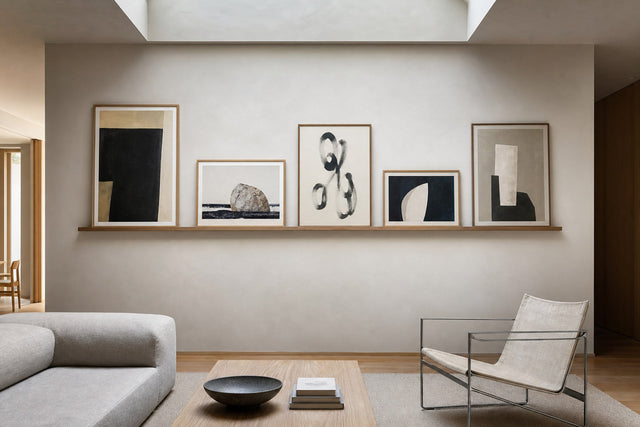
The easiest way to mix disparate styles is to unify them through color. If your centerpiece is a dramatic black-and-white photo, surround it with illustrations that utilize monochromatic tones.
- Monochrome Magic: Pair high-contrast black and white photography with black art prints or subtle white illustrations. This creates a cohesive, modern look that fits perfectly in minimalist homes.
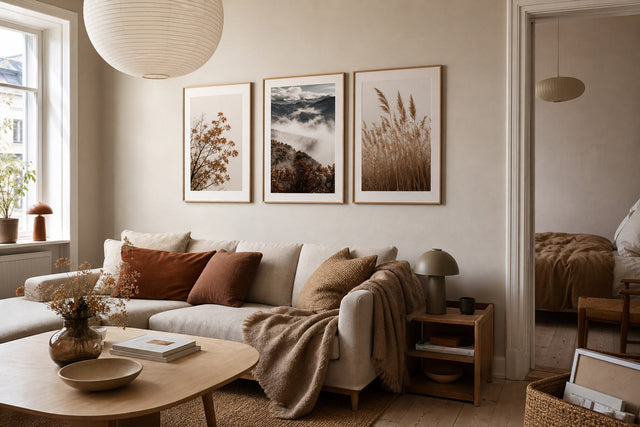
- Earth Tones: If you are using sepia-toned photos, integrate beige abstract art or warm brown graphic prints.
- Pop of Color: For a livelier room, take a vibrant photo and pick one accent color—perhaps a deep blue or a vibrant orange—and find an illustration that features that same hue.
Strategy 2: Thematic Juxtaposition
Another sophisticated approach is to keep the subject matter consistent but vary the medium. This demonstrates a curatorial eye.
The Nature Lover's Mix:
Combine the raw beauty of Nature Photography with the artistic interpretation found in Botanical illustrations. Imagine a sharp, high-definition photo of a misty forest placed next to a soft, hand-drawn sketch of leaves and plants. The photo grounds the viewer in reality, while the illustration highlights the delicate structure of the flora.
The Urban Explorer:
For a more modern, industrial vibe, mix Cities Photography with sharp Illustration & Graphic prints. A photo of the New York skyline looks incredible next to a geometric, Bauhaus-inspired print. You can even soften the concrete vibes by introducing Scandinavian design elements to keep the look approachable.
Strategy 3: Softening the Edges
Sometimes, photography can feel "hard." To soften a gallery wall without losing elegance, weave in Watercolor Paintings. The bleed and flow of watercolor provide a stunning contrast to the precision of a camera lens. This is particularly effective in bedrooms or nurseries where a calming atmosphere is desired. You might pair distinct Iconic photos with fluid abstract watercolors to balance structure with spontaneity.
The Posterlefi Formula: Proportions and Layout
We recommend the "60/40 Rule" for beginners. Choose a dominant medium for 60% of the wall and an accent medium for 40%.
- The Modernist: 60% Photography (clean lines, architecture) + 40% Abstract Art (to break up the rigidity).
- The Romantic: 60% Flowers and Illustration Art + 40% soft-focus photography (perhaps Female Figures or macro shots).
Comparison: Pure vs. Mixed Media Walls
| Feature | Photography Only | Illustration Only | Mixed Media (Recommended) |
|---|---|---|---|
| Atmosphere | Documentary, Realistic, Serious | Artistic, Whimsical, Interpretive | Dynamic, Curated, Layered |
| Visual Depth | High (creates windows to the world) | Flat to Moderate (surface focus) | Maximum (plays with depth perception) |
| Best For | Modern offices, minimal lofts | Creative studios, kids' rooms | Living rooms, entryways, dining areas |
| Suggested Collection | Landscape | Paintings | Bestsellers (Mix of both) |
Frequently Asked Questions
Should I use different frames when mixing media?
Generally, if you are mixing the art styles, we recommend keeping the frames consistent (e.g., all black or all oak) to act as a unifying element. However, for an eclectic "flea market" look, mixing Vintage prints in ornate frames with modern photography in sleek metal frames can work beautifully.
Can I mix black and white photos with colorful illustrations?
Absolutely. In fact, this is a high-impact strategy. A black and white architectural photo provides a neutral anchor, allowing colorful Summer prints or vibrant Abstract Art to pop without overwhelming the space.
How do I start if I'm unsure?
Start with our Deals section or New In page to see what catches your eye. Pick one "Hero" piece—usually the largest—and then select two smaller pieces in the opposite medium that share a color from the Hero piece.
Does this work for seasonal decor?
Yes! Mixing media allows for easy seasonal updates. Keep your core photography anchors (like family photos or landscapes) and swap out the illustrations. Rotate in Spring prints for freshness or Winter prints and Holiday posters & prints to add warmth during the colder months.
Conclusion
Mixing photography and illustration is not just a design choice; it is a way to reflect the multifaceted nature of your personal style. By blending the realism of Animals photography with the interpretative lines of Minimalist Art, you create a home that feels lived-in and loved.
Ready to start curating? Explore our Quote Posters to add a voice to your visuals, or dive into our Music collection for some rock-and-roll edge to pair with your serene landscapes. The possibilities are endless.
Composez votre mur avant d’acheter
Testez formats et disposition sur un mur virtuel — gratuitement.

Commencez avec ceux-ci
Voir toute la collection →


Inspiration associée

Retours sous 100 jours